


What are the key characteristics of Salmo salar?
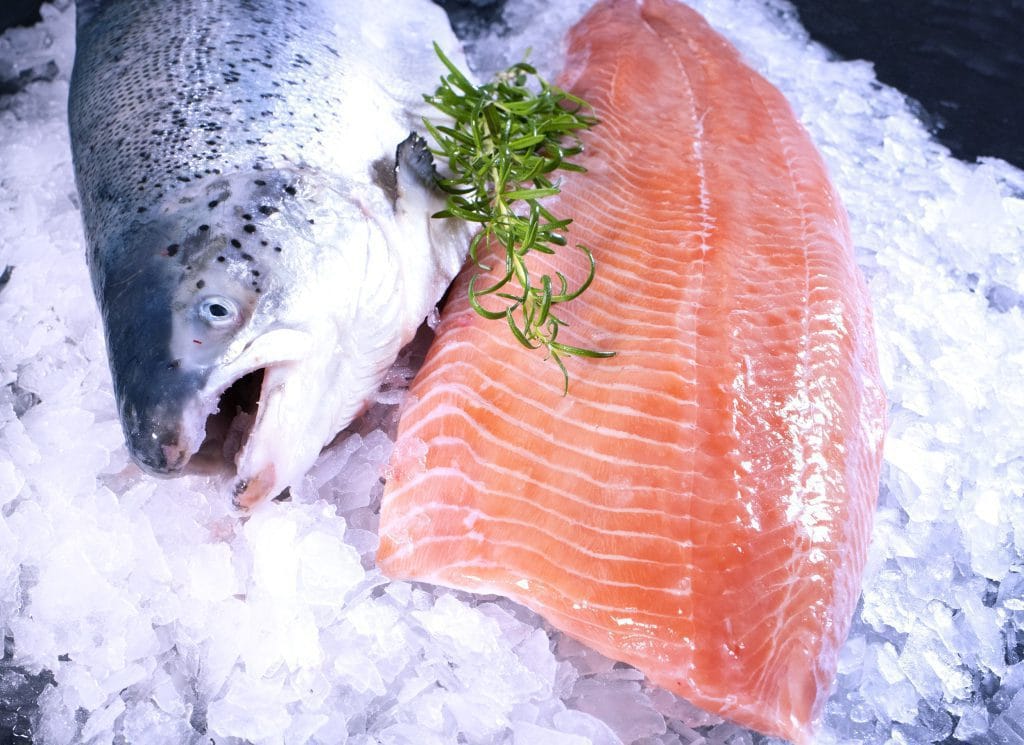
Salmo salar is the scientific name of the Atlantic salmon, a migratory fish in the family Salmonidae. Its key characteristics are an elongated, streamlined body, a blue-green back, silver flanks and a white belly in the sea phase, dark spots that stay almost entirely above the lateral line, a small adipose fin behind the dorsal fin and a forked tail. The species is anadromous: it is born in fresh water, grows in the sea and returns to the river to spawn.
That combination of features makes Salmo salar (Atlantic salmon) easy to distinguish from Pacific salmon species, which belong to a different genus. Below are the species characteristics in detail: appearance, habitat, life cycle, spawning colours and the difference between wild and farmed Atlantic salmon.
What is Salmo salar?
Salmo salar is the scientific species name of the Atlantic salmon, described by Linnaeus in 1758. Within the order Salmoniformes it belongs to the family Salmonidae and the subfamily Salmoninae, alongside trout and the Pacific salmon species. The species epithet salar derives from the Latin salire, to leap — a reference to the way the fish leaps up rapids during its upstream migration.
In English the species is simply called Atlantic salmon. In trade it is often named after its origin, such as Norwegian salmon or Scottish salmon. Those are not separate species: both are the same Salmo salar, only from a different production area. Other trade names, such as sockeye or chum, do refer to different species.
How do you recognise Salmo salar?
An Atlantic salmon in its sea phase is recognisable by its slender, streamlined body with an oval cross-section, a blue-green to brownish back, strongly silver flanks and a white belly. Scattered dark spots sit on the back and the upper half of the body; characteristically, those spots are almost absent below the lateral line. The tail fin is usually unspotted as well.
Behind the dorsal fin sits a small, fleshy adipose fin without fin rays — the typical Salmonidae feature. The tail is forked, and noticeably more deeply forked in young fish than in adults. The mouth does not extend beyond the rear edge of the eye and carries well-developed teeth. Juvenile salmon in the river look very different: parr have blue-violet marks along the flanks with small red spots in between, which makes them resemble trout.
Recognition points at a glance:
- elongated, streamlined body with small scales
- silver flanks, blue-green back and white belly in the sea phase
- dark spots above the lateral line, almost none below it
- adipose fin behind the dorsal fin, unspotted tail fin
- forked tail and a mouth reaching to below the rear edge of the eye
Where does the Atlantic salmon live?
Salmo salar (Atlantic salmon) lives in the temperate and arctic parts of the North Atlantic Ocean and in the rivers that drain into it. On the western side its natural range runs from northern Quebec in Canada to the north-eastern United States. On the eastern side it stretches from the White Sea and the Barents Sea through north-eastern Europe to the North Sea and Baltic basins, including Iceland.
The species depends on cool water: at sea it stays mainly in the upper water layers, and the rivers where it spawns remain relatively cold even in summer. There are also landlocked populations that spend their whole life in fresh water. In many European rivers wild populations have declined sharply because of dams, water quality and loss of spawning grounds, so the Atlantic salmon sold in Europe comes in practice almost entirely from salmon farming.
Why is Salmo salar a migratory fish?
Salmo salar is called a migratory fish because the species is anadromous: it reproduces in fresh water and grows in salt water. The eggs are deposited in the gravel of a river bed. The young fish, called parr, then stay in the river for one to several years before transforming into smolt — the stage in which the body turns silver and becomes physiologically suited to sea water.
At sea the salmon grows into an adult fish in roughly one to four years, and then returns to fresh water to spawn. That return is remarkably precise: salmon generally go back to the river where they were born. Unlike most Pacific species, not every Atlantic salmon dies after spawning; some survive and can spawn again in a later year.
Which characteristics change during the spawning season?
During the spawning season Salmo salar loses its silver sheen. The fish turns dull brown to yellowish and the skin becomes thicker and leathery. Males may develop red marbling or large dark blotches. The clearest feature in mature males is the hook on the lower jaw, the kype, which leaves the jaws meeting only at the tips; that hook recedes again after spawning.
These changes matter mainly for identification in the field. They play virtually no role in trade, because farmed salmon is harvested before the spawning stage.
Wild and farmed Atlantic salmon
Wild and farmed Atlantic salmon are the same species: Salmo salar. The difference lies not in the biology of the species but in the production method. Wild salmon is caught after a full natural life cycle; farmed salmon grows in sea pens, with managed feeding and a harvest size agreed per customer.
That difference carries through into the product. Farmed Salmo salar is available in a predictable size with a consistent fat distribution, which makes standardised processing possible. With wild catch, size and season vary more. Both are labelled separately: in the EU the commercial designation, the scientific name and the production method must be traceable on the label.
Salmo salar versus Pacific salmon
The core difference is taxonomic: Salmo salar is the only salmon species in the genus Salmo, while the Pacific salmon species — such as sockeye, chum, coho and king — belong to the genus Oncorhynchus. The end of the life cycle differs too: Pacific salmon almost always dies after a single spawning season, whereas part of the Atlantic salmon population survives it.
| Characteristic | Salmo salar (Atlantic salmon) | Pacific salmon |
|---|---|---|
| Genus | Salmo | Oncorhynchus |
| Distribution | North Atlantic Ocean and adjoining rivers | northern Pacific Ocean and adjoining rivers |
| After spawning | part of the population survives and spawns again | almost always dies after one spawning season |
| Supply in Europe | predominantly farmed | predominantly wild-caught |
Why species identification matters in the fish industry
Species identification is not a theoretical exercise in the fish industry; it is a practical and administrative requirement. Labels for fishery and aquaculture products in the EU must state both the commercial designation and the scientific name, together with the production method and the catch or production area. "Salmon" alone is therefore not enough: stating Salmo salar makes the species verifiable.
The species characteristics also determine what is possible in processing. The elongated body shape and the fat layer along the flank of Salmo salar produce a long, even fillet with a recognisable fat line. That allows the fish to be divided into loins, portions and cubes of a fixed weight, and the fat line to be removed in a controlled way per trim. In species with a different build and fat distribution, the same cut gives a different yield.
Salmo salar at Neerlandia Urk
Neerlandia Urk processes Salmo salar (Atlantic salmon) for the professional market. The salmon we process comes from Norway and Scotland; we also supply wild sockeye from Alaska, a Pacific species. In our production facility in Urk, salmon is filleted, graded, portioned, packed and frozen.
The range includes whole salmon, fillet with or without skin, loins, portions, steaks, cubes, poke and burgers, fresh or frozen. You can read more about fresh salmon and about supply to wholesale, retail and foodservice on our salmon supplier page. Questions about a specific specification or trim? Feel free to ask.
Frequently asked questions about Salmo salar
What does Salmo salar mean?
Salmo salar is the scientific name of the Atlantic salmon, established by Linnaeus in 1758. Salmo is the Latin word for salmon; salar derives from salire, to leap.
Is Salmo salar the same as Atlantic salmon?
Yes. Salmo salar is the scientific name and Atlantic salmon the English name for the same species. Norwegian and Scottish salmon are also Salmo salar; those names refer to the area of origin.
How do you recognise Atlantic salmon?
By the elongated body, the silver flanks with a blue-green back and white belly, dark spots that sit almost only above the lateral line, the adipose fin behind the dorsal fin and the forked tail.
Is Salmo salar a migratory fish?
Yes, Salmo salar is anadromous. The species is born in fresh water, migrates to sea as a smolt to grow and returns to the river to spawn.
What is the difference between Salmo salar and Pacific salmon?
Salmo salar belongs to the genus Salmo and lives in the North Atlantic region; Pacific salmon species belong to the genus Oncorhynchus and live around the Pacific Ocean. Pacific salmon almost always dies after one spawning season, while part of the Atlantic salmon population spawns again.
Is Salmo salar farmed?
Yes. The Atlantic salmon sold in Europe comes largely from aquaculture. Wild and farmed Atlantic salmon are the same species; the difference lies in the production method.