


Buying fish: what to look for
The quality of fish is never decided by a single property. Species, origin, catch or farming method, the time and temperature between harvest and processing, the product form and the way it is stored all contribute. Anyone buying fish is therefore assessing a supply chain, not just the piece of fish in front of them.
This page covers what you can check: how to judge freshness in whole fish, fillets and packed products, the difference between fresh and frozen, why origin and traceability matter, what MSC and ASC actually certify, and which product form suits which application.
What should you check when buying fish?
When buying fish, four things matter most: what the product exactly is, where it comes from, how it has been handled, and in which form it is delivered. The species name, the catch area or country of farming, the production method and the date or lot number together say more about quality than appearance alone.
Handling is often decisive. Fish spoils quickly at higher temperatures; the shorter the time between harvest and chilling or freezing, and the more stable the temperature afterwards, the better the eating quality. Well-chilled or promptly frozen fish that is a week old can therefore outperform “fresh” fish that has spent too long on a warm counter.
Finally, the product form determines how much work remains and how consistent the result is. Whole fish, fillet, loin, fixed-weight portion or cubes differ in yield, preparation time and shelf life. In a business context this is captured in a specification: species, origin, size grade, trim, fresh or frozen, glazing percentage and packaging. The sharper the specification, the fewer surprises on delivery.
How do you recognise fresh fish?
Fresh fish has a neutral, sea-like smell, a firm texture and a clear, undamaged appearance. Which signals you can actually use depends on the form in which the fish is offered: a whole fish reveals far more than a fillet or a packed product.
Whole fish
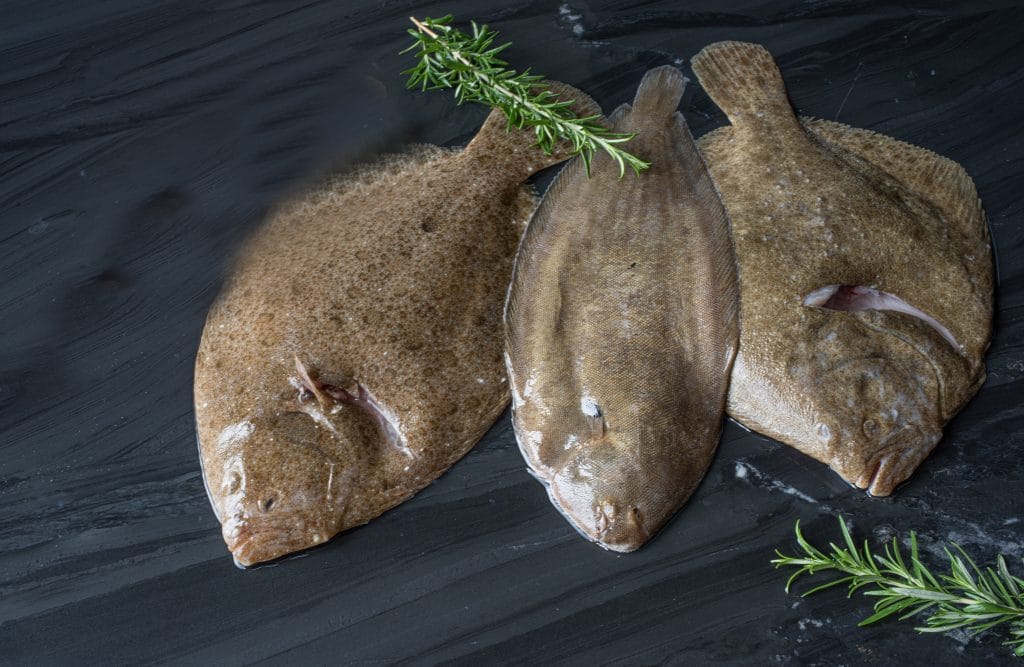
With whole fish, smell, skin, gills, eyes and firmness together give a reliable picture. The smell should be fresh and marine, not sharp or ammonia-like. The skin is shiny with a clear mucus layer, the scales sit firmly, the gills are bright red to pink and the eyes are convex and clear. The flesh springs back when pressed. Dull, sunken eyes or brownish gills point to age, although transport can play a role too.
Fillet
With fillets, the criteria for eyes, gills and scales no longer apply. Judge the colour and the surface instead: an even, translucent colour without discoloration or dried edges, a closed muscle structure without gaping segments, and little free liquid in the pack or on the tray. Smell remains a reliable signal here as well. Gaping — muscle segments separating — says more about handling and filleting moment than about spoilage.
Packed fresh fish and frozen fish
For packed fresh fish, assess the packaging and the data: an intact pack, the use-by date, the storage temperature and the labelling with species, catch area or country of production and method. Fresh fishery products are kept at or close to the temperature of melting ice, around 0 to 2 °C, so the temperature in the chiller is a genuine quality indicator.
Frozen fish calls for different signals. Look for a hard, fully frozen state, an intact pack and the absence of freezer burn, ice crystals inside the packaging or blocks frozen together. Those last two point to temperature fluctuations during storage or transport. The glazing percentage — the ice layer that prevents dehydration — belongs on the label and does not count as fish weight.
Fresh or frozen fish: what is the difference?
Frozen fish is not automatically of lower quality than fresh fish. The difference lies in the preservation method, not in a quality class. Fish frozen shortly after harvest, on board or in the plant, retains the freshness of the moment it was frozen; fresh fish keeps ageing continuously, even under good refrigeration.
In practice the trade-offs are different. Fresh fish has a short shelf life and requires a tight cold chain and fast turnover. Frozen fish keeps for months at approximately −18 °C or colder, is easier to plan and limits waste, but requires freezer capacity and controlled thawing. Thawing always involves some drip loss; how much depends on freezing speed, storage temperature and thawing method. IQF products, frozen piece by piece, allow small quantities to be used without thawing the rest.
For some applications freezing is a safety requirement. Where fish is eaten raw or almost raw, EU hygiene legislation prescribes a freezing treatment to kill parasites, with exemptions for certain products and origins. Once thawed, fish must not be refrozen without heat treatment in between. More about this product form is on the page about frozen fish.
Why do origin and traceability matter?
Origin matters because it determines which species you are actually buying, under which rules it was caught or farmed and which properties you may expect. Traceability is the ability to follow a batch back through the chain, from processor to supply. Together they make the label verifiable.
For fishery and aquaculture products, the EU market regulation prescribes fixed information when sold to the final consumer: the commercial designation and the scientific name, the production method (caught, caught in fresh water or farmed), the catch area or country of farming, the fishing gear for wild catch and whether the product has been defrosted. That information is not a formality — it makes clear whether “cod” really is Gadus morhua and which area the batch comes from.
Origin in itself says nothing about sustainability. Whether a batch is responsible depends on the species, the state of the stock, the catch area, the gear or farming system and any certification. Local does not automatically mean fresher or more sustainable, and wild is not by definition better than farmed. What does help is a supplier that can show, per batch, where the fish comes from and which documents belong to it.
What do MSC and ASC mean?
MSC and ASC are two different labels. The blue MSC label (Marine Stewardship Council) applies to wild-capture fisheries and assesses whether a fishery maintains the stock and limits its impact on the ecosystem. The ASC label (Aquaculture Stewardship Council) applies to aquaculture and assesses farming systems on environmental impact, feed, water quality and labour conditions, among other criteria.
Both work with a separate Chain of Custody certification for every party that trades or processes the product afterwards. Only when every link is certified and the batch stays administratively separated from non-certified fish may the logo appear on the end product. A label therefore always belongs to a specific batch, not to a species or a country.
Alongside these, organic aquaculture exists under European Regulation 2018/848. That is a legal framework with its own requirements for feed, stocking density and treatments, and it is separate from ASC. Background is available under organic salmon and on the page about sustainability and certification.
Which fish suits which application?
The right choice depends on the preparation and the consistency you need. Whole fish works when presentation matters and there is room for preparation, but gives a lower and more variable yield. Fillet is versatile and broadly usable. Loins — the thick, even parts of the fillet — cook evenly and portion cleanly. Fixed-weight portions give a predictable cost per plate, and cubes or strips work well in dishes where the fish is an ingredient.
The species mainly determines flavour and texture. Fatty fish such as salmon stays succulent when grilled, pan-fried or hot-smoked; lean white fish such as plaicelemon sole or halibut needs shorter cooking times and suits milder preparations. For salmon, the common forms are salmon filletloinsportions and cubes. Buyers working with larger volumes will find background under bulk fish.
Fish at Neerlandia
Neerlandia Urk is a fish processor in Urk, the Netherlands, supplying fish and seafood to retail, foodservice, wholesale and industry. In its own fish processing facility, fish is filleted, portioned, packed and delivered chilled or frozen, to the customer’s specification. Besides salmon this includes flatfish and other North Sea and imported species.
At company level, Neerlandia holds ASC, MSC, BIO, IFS Food, FDA and GLOBAL G.A.P. certification, among others, and works according to the HACCP methodology. That certification applies to the company and the process. Whether a specific batch also carries MSC, ASC or organic status depends on the origin of that batch and follows from the accompanying documentation — exactly the distinction described above.
Want to know which species, product forms and specifications are possible in your situation, and which documentation comes with them? Ask your question directly.
Frequently asked questions about buying fish
The species and its scientific name, the catch area or country of farming, the catch or production method, the handling in the cold chain, the product form and the date or lot number. Together these tell you more about quality than appearance alone.
In whole fish by a fresh, marine smell, shiny skin, firmly attached scales, bright red gills, convex clear eyes and firm flesh. In fillets those criteria fall away and you judge smell, an even colour, a closed muscle structure and little free liquid. For packed fish, check the packaging, the use-by date and a storage temperature of roughly 0 to 2 degrees Celsius.
No. Freezing is a preservation method, not a quality class. Fish frozen shortly after harvest retains the quality of that moment, while fresh fish keeps ageing. The differences lie mainly in shelf life, planning, drip loss after thawing and the storage required.
Origin determines which species you buy, under which rules it was caught or farmed and which properties you may expect. Combined with traceability it makes the label verifiable. Origin in itself says nothing about sustainability: that depends on species, stock status, catch area, gear or farming system and certification.
MSC is the label for wild-capture fisheries and assesses whether a fishery maintains the stock and limits its impact on the ecosystem. ASC is the label for aquaculture and assesses farming systems on environmental impact, feed and labour conditions, among other criteria. Both also require Chain of Custody certification for every link in the trading chain.
Questions about buying fish or about a specific specification? Chat with us on WhatsApp.