

Salmon fish: species, origin and health explained
Salmon fish is a collective name for several species in the salmonid family. Atlantic salmon (Salmo salar) is the species most widely sold fresh in Europe; in addition there are several Pacific salmon species, such as sockeye, coho and chinook. Salmon is generally rich in protein and, depending on the species, in omega-3 fatty acids.
On this page you can read which salmon fish species exist, what is known about their nutritional value, what the difference is between wild and farmed salmon, what to look for in sustainable salmon and how salmon can be prepared.
What is salmon fish?
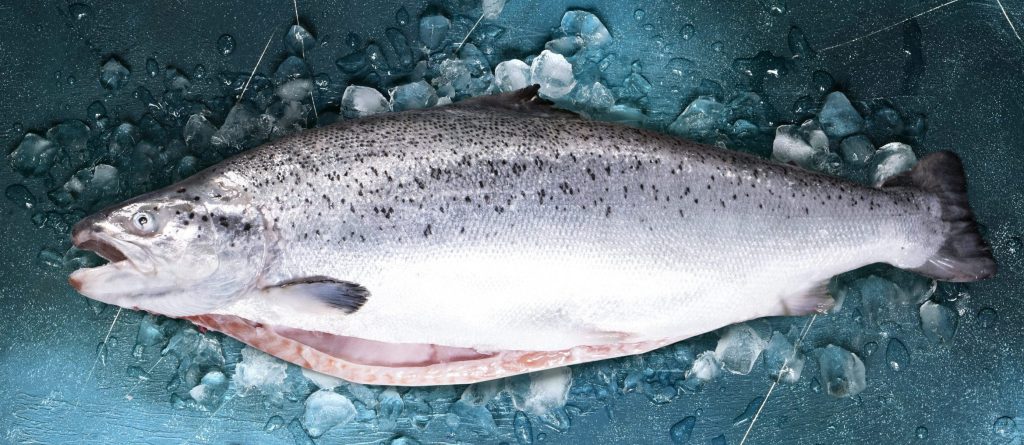
Salmon fish is a collective name for several species in the salmonid family (Salmonidae). It is therefore not a single species: the name covers both Atlantic salmon and several Pacific salmon species.
Atlantic salmon has the scientific name Salmo salar. Salmo salar therefore refers specifically to Atlantic salmon and not to salmon in general. Pacific salmon species belong to the genus Oncorhynchus and each has its own scientific name.
Salmon is an anadromous fish: the animals are born in fresh water, grow up at sea and return to fresh water to spawn. This life pattern applies to wild populations; farmed salmon is kept under controlled conditions.
Which salmon fish species are there?
The best known species are Atlantic salmon and the Pacific species sockeye, coho and chinook. They differ in origin, colour, fat content and availability.
Atlantic salmon
Atlantic salmon (Salmo salar) comes from the North Atlantic Ocean and is the species most commonly offered fresh in Europe. Supply consists largely of farmed salmon. The flesh is orange-pink, relatively fatty and mild in flavour, which makes the species suitable for a wide range of preparations and product forms.
Sockeye salmon
Sockeye (Oncorhynchus nerka) comes from the North Pacific and is mainly wild caught. The species stands out for the deep red colour of its flesh and a pronounced flavour.
Coho salmon
Coho (Oncorhynchus kisutch) also comes from the Pacific and generally has a milder flavour and lighter coloured, somewhat leaner flesh than sockeye. Coho is both wild caught and farmed.
Chinook salmon
Chinook (Oncorhynchus tshawytscha), also known as king salmon, is the largest Pacific salmon species. It is known for a high fat content and a full flavour, and availability in Europe is limited.
| Species | Scientific name | Origin | Typical characteristics | Usually wild or farmed |
|---|---|---|---|---|
| Atlantic salmon | Salmo salar | North Atlantic Ocean | Orange-pink flesh, relatively fatty, mild flavour | Mainly farmed |
| Sockeye | Oncorhynchus nerka | North Pacific Ocean | Deep red flesh, pronounced flavour | Mainly wild |
| Coho | Oncorhynchus kisutch | North Pacific Ocean | Lighter coloured flesh, milder flavour | Wild and farmed |
| Chinook | Oncorhynchus tshawytscha | North Pacific Ocean | Largest species, high fat content, full flavour | Wild and farmed |
Is salmon fish healthy?
Salmon is a protein-rich fish. Atlantic salmon generally belongs to the oily fish species and contains omega-3 fatty acids such as EPA and DHA. The exact nutritional value differs per species, origin and product.
Besides protein and omega-3 fatty acids, salmon can contain nutrients such as vitamin B12, vitamin D and selenium. The amounts depend on the species, the fat content and the preparation. Salmon therefore fits within a varied diet, but health effects are not guaranteed and differ from person to person.
National dietary guidelines in several European countries recommend eating fish about once a week, preferably oily fish, and choosing a sustainable option. Check the guidelines that apply in your own country.
Wild salmon versus farmed salmon
Wild salmon grows up in its natural habitat; farmed salmon is raised under controlled conditions. That difference affects availability, fat content, flavour and price.
Wild salmon is seasonal and supply varies per species and fishery. Farmed salmon, in Europe mainly Atlantic salmon, is available year round in a consistent size grading and product form. The fat content of farmed salmon is usually higher, but exact values differ per batch, feed and origin. Which choice is appropriate depends on the application, the required specification and the available supply.
How do you recognise sustainable salmon fish?
Sustainability is recognised by the origin and the relevant certification of the specific product, not by the species alone.
For farmed salmon the ASC label can be relevant. MSC applies to fish from sustainable wild-caught fisheries. Always check the label and the origin of the specific product.
In addition, organic certification exists for aquaculture, which sets different requirements than ASC. A label always applies to a specific product or production site, so in professional purchasing ask for the documentation that belongs to the batch. You can read more background on the page about organic salmon.
How can you prepare salmon?
Salmon can be grilled, pan-fried, poached, steamed or oven-baked, and is also used raw in sushi and sashimi. The fat content makes the fish forgiving in short, hot preparations.
- Grilling or pan-frying: a marinade of lemon, olive oil and herbs enhances the flavour.
- Oven: salmon fillet with a crust of sesame seed, mustard or herbs.
- Poaching or steaming: gives a soft texture and a mild flavour.
- Raw: only with products that are suitable for raw consumption.
The choice between whole fish, fillet, loin, portion or steak partly determines cooking time and yield in the kitchen.
Salmon fish for professional buyers
Neerlandia Urk processes Atlantic salmon for wholesale, foodservice, retail and fishmongers, among others. Depending on the application, whole salmon, fillets, portions, loins, steaks and cubes are available.
Which product form is suitable depends on the application, the required size grading and the specification. View the range of Atlantic salmon for wholesale and foodservice for more information about the available forms, or go directly to salmon fillet and salmon loins.
Looking for salmon fish for professional supply? View the available product forms and specifications.
Chat with us on WhatsAppFrequently asked questions about salmon fish
What is salmon fish?
Salmon fish is a collective name for several species in the salmonid family. Atlantic salmon is scientifically known as Salmo salar.
Is salmon an oily fish?
Atlantic salmon is generally an oily fish. The fat content varies between species and products.
Is salmon healthy?
Salmon is rich in protein and can contain omega-3 fatty acids, vitamin B12 and vitamin D. The exact nutritional value differs per species and product.
What is the difference between wild salmon and farmed salmon?
Wild salmon grows up in its natural habitat. Farmed salmon is raised under controlled conditions. Origin, fat content, flavour, availability and sustainability can differ.
Which salmon is sustainable?
Check the origin and the relevant certification. ASC is used for responsible aquaculture and MSC for sustainable wild-caught fisheries.