


Squid vs Octopus: What’s the Difference?
Squid and octopus are different cephalopods. An octopus has eight arms, while a squid has eight arms plus two longer feeding tentacles. Squid usually have an elongated mantle with fins; common octopuses have a rounded mantle. They also differ in texture, preparation and seafood uses. And calamari? Calamari is squid.
Compare the differences Taste and cooking

- Elongated mantle
- Fins at the end of the mantle
- Eight arms and two feeding tentacles
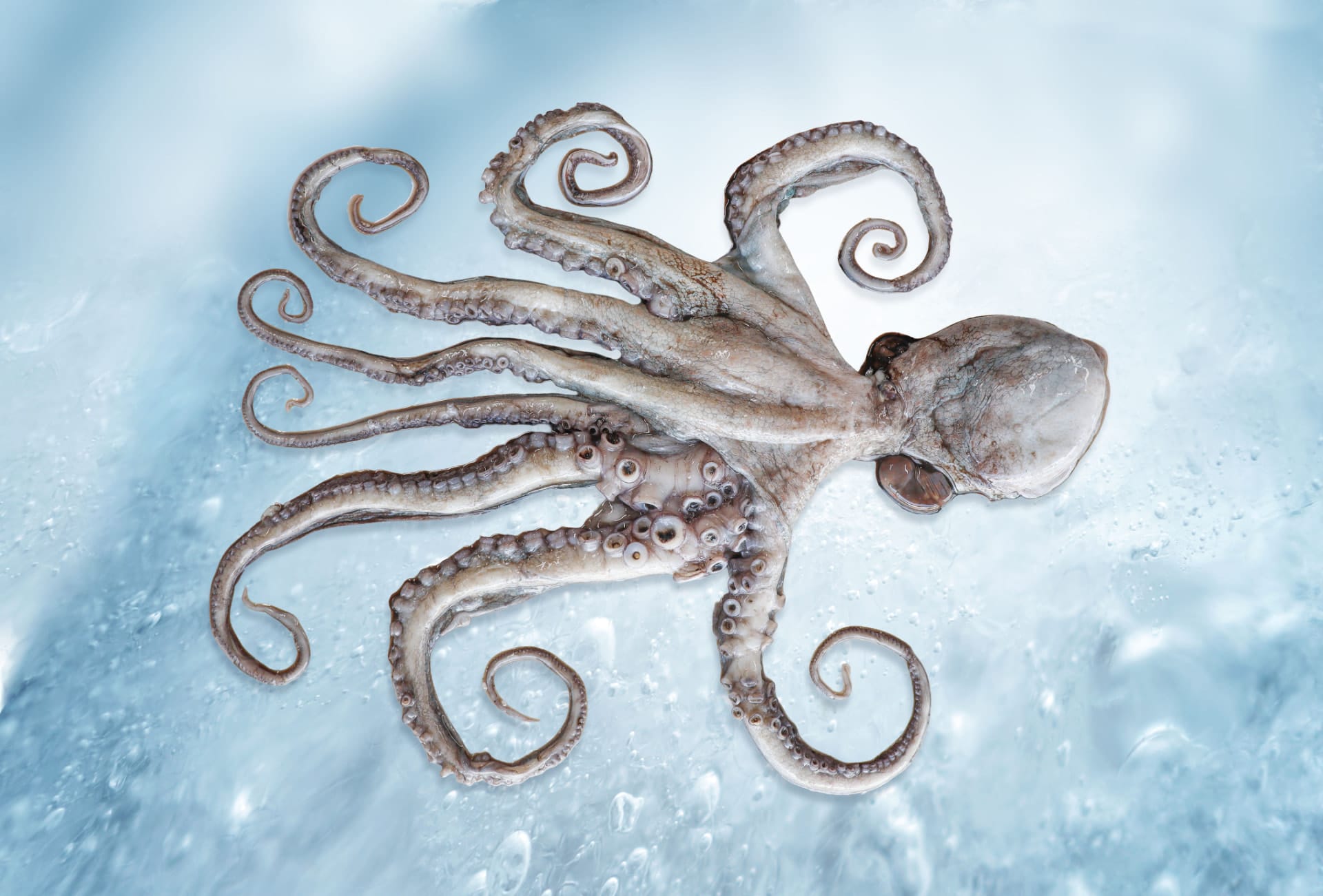
- Rounded mantle
- Eight sucker-lined arms
- Soft body without a pen
Squid vs Octopus at a Glance
| Feature | Squid | Octopus |
|---|---|---|
| Arms and tentacles | Eight arms plus two longer feeding tentacles | Eight arms, no tentacles |
| Body shape | Usually elongated, torpedo-shaped mantle | Usually rounded, bag-like mantle |
| Internal support | A flexible internal shell called the pen (gladius), not a backbone | No pen; the body is almost entirely soft |
| Fins | Fins on the mantle | Most familiar shallow-water octopuses have no fins; some deep-sea species do |
| Typical habitat | Many species swim in open water, often in groups | Many species live on the seafloor, in dens and crevices |
| Texture | Thin mantle; firm to tender depending on size and cooking | Thick, muscular arms; firm to tender depending on cooking |
| Common culinary uses | Rings, strips, whole grilled, stuffed mantles | Grilled or braised arms, salads, slow-cooked whole octopus |
| Calamari terminology | Calamari is squid | An octopus dish is not calamari |
Species, size and preparation affect the comparison. The table describes common patterns, not rules for every one of the hundreds of squid and octopus species.
How to Tell Squid and Octopus Apart
The quickest way to see the difference between squid and octopus is to count the limbs. Both have eight arms lined with suckers, but squid also have two longer feeding tentacles that they shoot out to catch prey. When people talk about octopus tentacles, they use common culinary and trade language; anatomically, the eight limbs of an octopus are arms. You can read more about the trade term on our page about octopus tentacles.
Body shape is the next clue. A squid has a long, streamlined mantle, usually with fins, and inside it a flexible pen made of chitin. The pen is a remnant of an internal shell, not a bone or a backbone. Most familiar shallow-water octopuses have a soft, rounded mantle without fins or a pen, although some deep-sea octopuses do have fins. The mantle is the muscular body, not the head.
Many squid swim in open water, sometimes in large groups, while many octopuses live on the seafloor and shelter in dens. These are general tendencies rather than fixed rules. Both animals are cephalopods, both have a beak, and many species can change color and release ink to escape predators, as the Smithsonian Ocean Portal explains.
Squid vs Octopus Taste and Texture
In terms of squid vs octopus taste, both have a mild, clean seafood flavor that takes on marinades, herbs, citrus and smoke well. Neither tastes strongly fishy when it is fresh and handled correctly. The bigger difference is texture. Squid mantle is relatively thin, so it is often sliced into rings or strips. Octopus arms are thick and muscular, with a denser bite.
Species, size, the part of the animal, thickness and cooking method all shape the final result. A small squid cooked briefly can be tender, while the same squid cooked too long can turn rubbery. Octopus that is cooked slowly and long enough can become tender, while undercooked octopus is often chewy. So it is fair to say that neither one is always tender or always tough; the cooking matters as much as the raw product.
Typical uses reflect this: squid for fried or grilled rings, stir-fries and stuffed mantles, and octopus for grilled arms, salads, stews and slow-braised dishes.
Is Calamari Squid or Octopus?
Calamari is squid. The word comes from the Italian for squid and is used on menus for squid dishes in general. Calamari can be served as rings, whole mantles or arms. The rings are cut from the mantle, the body tube, not from the head. Calamari is also not only deep-fried squid: it can be grilled, sautéed, stewed or stuffed. A dish made from octopus is not calamari, even when it is fried or served in a similar way.
Cooking Squid and Octopus
A useful rule for both is: cook either briefly or for a long time. Thin squid is often cooked quickly over high heat, such as frying, grilling or sautéing. Thicker squid and octopus are often cooked longer and more gently, such as braising, simmering or slow roasting, before a final grill or sear. Cooking somewhere in between tends to give the toughest texture.
Size, thickness, species and product form all change the timing, so there is no single cooking time that works for every product. It also matters whether you start from raw or precooked octopus. Precooked octopus is usually finished by heating or grilling, while whole raw squid or octopus needs cleaning and full cooking before serving. Always follow the supplier’s handling instructions and local food safety guidance for thawing, storage and core temperatures.
Choosing Squid or Octopus for Foodservice
For chefs and buyers, the choice between octopus vs squid usually starts with the dish. Ask what shape and presentation you need, what portion size fits the menu, how much preparation time your kitchen has and whether you want to start from a raw whole animal or a further processed product.
Cut from the squid mantle
Made with squid
Octopus prepared in-house
These are culinary applications, not automatically products from our range. When comparing offers, look beyond the price per kilogram. Cleaning and cutting loss, cooking loss and the labor needed to prepare the product all affect what a usable kilogram really costs.
Raw material cost per usable kilogram = purchase price per kilogram / usable yield expressed as a decimal.
For example, if you pay a given price per kilogram and keep half of the weight after cleaning and cooking, the usable yield is 0.5. Labor and energy are not included in this formula, so add them separately when you compare products.
Squid and Octopus from Neerlandia Urk
Neerlandia Urk is a fish processing company based in Urk, the Netherlands, supplying business customers such as importers, wholesalers and foodservice companies. Specifications, availability and delivery to the United States are confirmed per inquiry.
Squid (Loligo vulgaris)
We supply squid of the species Loligo vulgaris. Contact our team for current specifications and availability.
Whole octopus
Whole raw Octopus vulgaris, fresh or frozen. Published pack range: 5–20 kg cardboard or polystyrene box, variable weight. Exact specifications and availability on request.
Frequently Asked Questions
Are squid and octopus the same animal?
No. Squid and octopus are different animals that both belong to the cephalopods, a group of mollusks that also includes cuttlefish and nautiluses. They share traits such as arms lined with suckers and a beak, but they differ in body shape, limbs, internal structure and behavior, as the comparison table above shows.
Do octopuses have arms or tentacles?
Anatomically, an octopus has eight arms and no tentacles. In biology, tentacles are the two longer feeding limbs that squid and cuttlefish use to catch prey. Menus and seafood trade still often say octopus tentacles, which is everyday language rather than an anatomical term.
Can squid replace octopus in a recipe?
Sometimes, but expect a different result. Squid is usually thinner and is often cooked quickly, while octopus arms are thicker and often need longer, gentler cooking. Adjust the cooking method and timing, and check whether the dish depends on the shape and bite of octopus arms.
Is cuttlefish the same as squid?
No. Cuttlefish is a separate cephalopod. It has a broader, flatter body, fins that run along the whole mantle and a hard internal cuttlebone, while squid has a flexible pen. Cuttlefish is sometimes sold or cooked in similar ways, but it should be labeled as cuttlefish.
What should buyers specify when ordering?
Specify the species, fresh or frozen, product form (for example whole), size or weight grade, packaging type and pack weight, the quantity and the destination country. Ask the supplier to confirm specifications, documents and availability in writing before ordering, because these vary by season and catch.
Discuss your seafood requirements
Tell us which product you need, the quantity and the destination country, and our sales team will get back to you.
Or use our contact page.


