


Professional octopus supply
Octopus Tentacles
Explore octopus tentacles, their professional applications and the difference between arms, tentacles and whole octopus. Neerlandia Urk supplies fresh and frozen whole octopus for international B2B customers.
Chat with us on WhatsAppWhat are octopus tentacles?
“Octopus tentacles” is the familiar culinary and commercial term for the eight flexible limbs of an octopus. Anatomically, these limbs are arms: suckers run along much of their length. True tentacles, such as those found on squid, generally have suckers concentrated near the tip.
Not sure which species fits your menu? Read our guide squid vs octopus: differences in taste, texture and cooking.
For buyers and chefs, the term usually describes an octopus product centered on the arms. Product form matters: separated, cooked or portioned tentacles are not the same specification as fresh or frozen whole octopus.
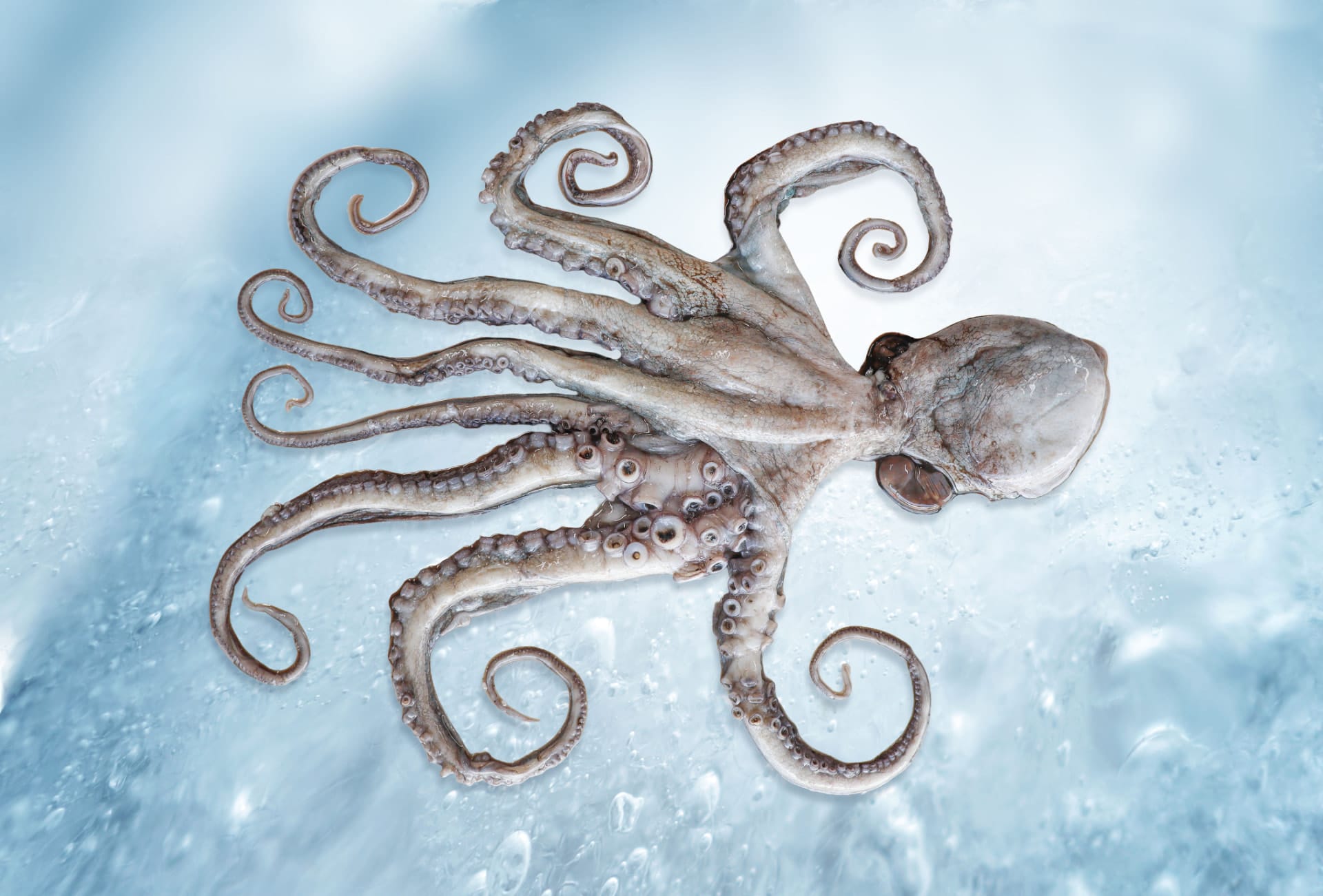

Frozen octopus for wholesale and foodservice
Professional purchasers need a clear product specification before comparing whole octopus with separately prepared tentacle products. Processing format, packaging, storage condition and intended use all influence handling in a kitchen or processing facility.
Neerlandia’s confirmed offering focuses on whole octopus in fresh and frozen formats. This gives foodservice suppliers, wholesalers and seafood processors a raw material that can be prepared according to their own application and specification.
Octopus product specifications and wholesale packaging
These details reflect the currently documented whole-octopus range. Exact availability and order requirements should be confirmed before purchase.
| Specification | Documented option |
|---|---|
| Product | Whole octopus |
| Species | Octopus vulgaris |
| Condition | Fresh or frozen |
| Processing format | Whole or block-frozen |
| Packaging | Bulk cardboard or polystyrene box |
| Published pack range | 5–20 kg, variable weight |
| Other requirements | Available upon inquiry |
Octopus for foodservice, wholesale and seafood processing
Foodservice & restaurants
Whole octopus can be prepared for Mediterranean and international menus, allowing professional kitchens to control cooking method, portion size and presentation.
Wholesalers & distributors
Clear communication about format, condition and packaging helps professional buyers compare octopus products and plan distribution requirements.
Seafood processing
Whole octopus can serve as raw material for further professional preparation when buyers need to determine their own cuts and finished format.
Octopus tentacles vs whole octopus
The two descriptions can refer to different commercial specifications. Confirm the physical product rather than relying on the market name alone.
Octopus tentacles
- Common trade term for octopus arms
- May refer to separated, cooked or portioned products
- Can reduce preparation for a specific application
- Exact processing and condition require confirmation
Whole octopus
- Complete product including all eight arms
- Offers flexibility for further professional preparation
- Available fresh or frozen in Neerlandia’s documented range
- Whole or block-frozen formats are documented
Frequently asked questions about octopus tentacles
How many brains does an octopus have?
An octopus has one central brain, while much of its nervous system is distributed through large neural centers in its eight arms. This is why octopuses are often described as having nine brains, but that phrase is a useful simplification rather than a literal anatomical count.
How many legs does an octopus have?
An octopus has no legs in the strict anatomical sense. It has eight arms lined with suckers. In seafood trade and everyday language, these arms are often called octopus legs or tentacles, which explains why all three terms appear in product searches and menus.
What are octopus arms called?
They are anatomically called arms. Each arm has suckers along much of its length, unlike a true tentacle, which typically has suckers concentrated near its tip. In cooking and seafood commerce, the terms octopus tentacles and octopus legs are still commonly used.
How many arms does an octopus have?
An octopus has eight arms. The arms are flexible, muscular and lined with suckers that help the animal sense, grip and move. Although “eight tentacles” is common wording, “eight arms” is the more accurate biological description.
What are octopus tentacles?
Octopus tentacles is the common culinary and commercial name for the animal’s sucker-lined arms. The wording is widely used for menu items and prepared seafood products, even though biologists classify the eight limbs of an octopus as arms rather than true tentacles.
Do octopuses have arms or tentacles?
Octopuses have arms, not true tentacles. Arms carry suckers along most of their length, while tentacles generally have suckers mainly at the tip. The seafood industry often uses “tentacles” as a familiar market term, so both descriptions may appear in commercial contexts.
What is the difference between raw and cooked octopus tentacles?
Raw octopus arms have not been heat-treated and require suitable professional preparation before serving. Cooked octopus tentacles have already undergone a cooking step and may need less kitchen preparation. Product condition, storage instructions and intended use should always be confirmed with the supplier.
How is frozen octopus packaged for wholesale?
Wholesale packaging depends on the product form and supplier specification. Neerlandia’s currently documented whole-octopus range includes variable-weight bulk packs of 5–20 kg in cardboard or polystyrene boxes. Exact format and availability should be confirmed for each order.
Discuss your octopus requirements
Contact our seafood team about whole octopus, fresh and frozen formats, packaging requirements and international B2B supply.
Chat with us on WhatsAppRelated information: view our octopus range or explore all seafood products.


